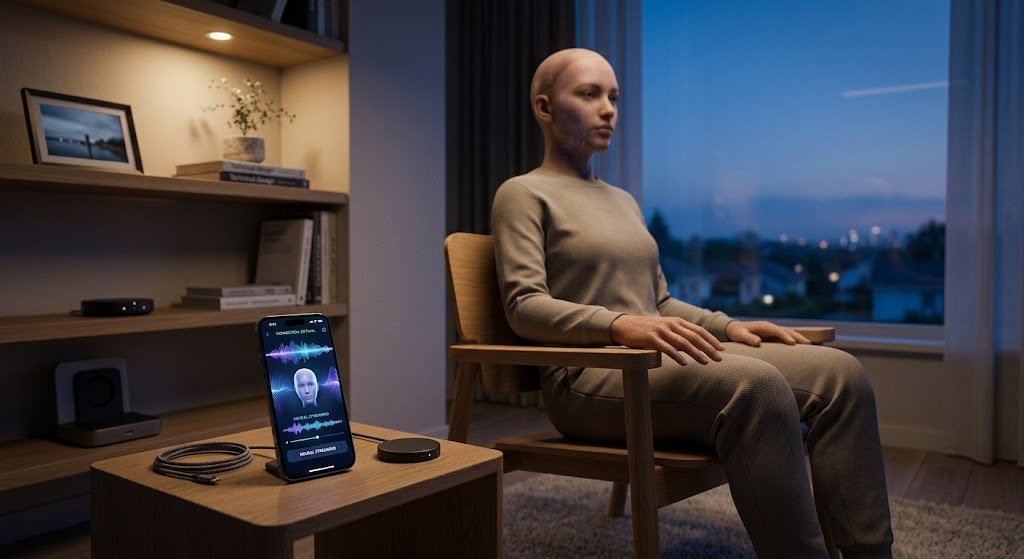
An AI doll is a physical companion device that combines a lifelike body with artificial intelligence for conversation, emotional interaction, and sometimes physical intimacy. These products range from desktop companions priced under $2,000 to full-body humanoids costing over $175,000, with major platforms including Lovense Emily, Realbotix Aria and Harmony, and emerging consumer options from companies like UBTECH and 春水堂. The category promises companionship and emotional connection, but it also carries documented privacy, data security, and developmental concerns that buyers must weigh carefully.
At-a-Glance
- What it is: A physical doll or humanoid integrated with AI for conversation and companionship, not just a static object
- Price range: From roughly $2,000 for desktop companions to over $175,000 for full-body premium humanoids
- Key players: Lovense (Emily), Realbotix (Aria, Harmony), UBTECH (UWorld U1), 春水堂 (consumer humanoid)
- Core technology: Large language models, facial expression systems, touch sensors, and on-device or cloud AI processing
- Main risk: Documented data breaches, unclear retention policies, and weak security in connected devices
- Best for: Adults seeking companionship who understand the limitations and privacy tradeoffs
What Is an AI Doll?
An AI doll is a physical product that combines a humanoid or semi-humanoid body with artificial intelligence software. Unlike a traditional doll, an AI doll can hold conversations, remember past interactions, and respond to touch or voice with emotional or physical reactions. Unlike a chatbot on a phone, it occupies physical space and offers presence.
The category spans a wide spectrum. At the entry level, desktop companions like KOIBOT Rola focus on emotional conversation and facial expressions without full-body movement . Mid-range options like Lovense Emily offer full-size silicone bodies with basic facial animation and sensory feedback . At the high end, Realbotix builds full-body humanoids with servo-driven expressions and advanced conversational AI for commercial and research applications .
AI Doll vs. AI Companion App
| Dimension | AI Doll (Physical) | AI Companion App |
|---|---|---|
| Form factor | Physical body, often silicone | Software only, on phone or web |
| Interaction | Voice, touch, facial expression | Text, voice, images |
| Price | $2,000 to $175,000+ | Free to $100/month |
| Privacy risk | Device sensors, cloud data, physical presence | Account data, conversation logs |
| Primary use | Physical companionship, presence | Conversation, roleplay, emotional support |
Major AI Doll Platforms in 2026
Lovense Emily
Lovense, a Singapore-based company known for connected adult products, unveiled Emily at CES 2026. The doll is life-size, features a silicone exterior with a poseable skeleton, and includes limited facial movement including mouth motion . The company emphasizes its AI software, which it claims enables memory of past interactions and adaptation to user preferences .
Emily connects via Bluetooth and Wi-Fi to the Lovense app. The doll is priced between $4,000 and $8,000 depending on customization, with shipping expected in 2027. A $200 reservation fee places buyers on a waitlist . Lovense has previously integrated ChatGPT for intimate story generation in its app ecosystem, suggesting the Emily system may use third-party language models .
Realbotix Aria and Harmony
Realbotix, founded in 2020, traces its lineage to the Harmony AI Doll first revealed in 2017 . The company has evolved from companionship dolls toward broader commercial applications including events, training, and healthcare. Its flagship Aria features advanced servo-driven facial expressions, conversational intelligence, and emotional recognition powered by proprietary AI and robotics architecture .
Realbotix emphasizes conversational AI improvements, including integration of large language models like ChatGPT and AI vision systems for face recognition and object tracking . Pricing for RealDoll Harmony starts at $7,349.99 for an interactive head and $11,349.99 for a full body configuration, though these figures exclude import duties, taxes, and accessories . Higher-end Realbotix full-body models reach $175,000 .
UBTECH UWorld U1
UBTECH began mass deliveries of its UWorld U1 companion humanoids in China in September 2026, following a June launch that logged over 13,000 orders . The product line includes three tiers: U1 Lite (semi-torso desk companion), U1 Pro (full-size home unit), and U1 Ultra (premium configuration). Pricing starts at RMB 119,800, with the Ultra reaching approximately RMB 990,000 .
UBTECH positions the U1 as emotional and lifestyle interaction rather than household chores. The company cites up to 88 degrees of freedom, medical-grade silicone skin, sub-20-millisecond lip-sync targets, and local-first memory with user-controlled data wipe . Independent field metrics on battery life and return rates were not available at the time of first deliveries.
春水堂 Consumer Humanoid
Chinese adult intimacy company 春水堂 launched a consumer-oriented humanoid companion robot in July 2026, priced at RMB 15,800 to RMB 16,800 depending on height (160cm, 165cm, 170cm) . The product includes a temperature system, five touch sensors, 16 active head degrees of freedom, 81 passive body degrees of freedom, and a multimodal emotional model with short, medium, and long-term memory .
The company states that visual and memory data do not upload to the cloud, using local computation via an RK3576 chip with 8+64G memory . 春水堂 positions the product as prioritizing “body plus emotion” companionship rather than walking or household tasks. The company plans a male companion version for Q4 2026 and elder care variants in the future.
Emerging Options
KOIBOT Rola, a Kickstarter project, offers a handcrafted AI companion robot focused on natural conversation in English and Japanese, evolving memory, and lifelike facial expressions. The device does not walk or move its body . Pricing and fulfillment details are available on the campaign page.
How AI Dolls Work
AI dolls combine several technical systems into a single physical product.
Conversational AI. The core interaction uses large language models (LLMs) to generate responses. Some companies build proprietary models, while others integrate third-party APIs like ChatGPT . The language model determines conversation quality, memory retention, and personality consistency.
Memory and personalization. AI dolls track past interactions to build a sense of continuity. This memory may be stored locally on the device or in cloud servers. Local storage offers privacy benefits but limits memory capacity and cross-device access .
Facial expression and motion. Higher-end models use servo-driven mechanisms to produce facial expressions, mouth movement during speech, and sometimes body motion. Lower-cost options may offer only limited facial animation or none at all .
Sensory feedback. Many AI dolls include touch sensors in specific body areas that trigger responses. Lovense Emily, for example, has sensors that react to caresses . The sophistication of this feedback varies widely.
Connectivity. Most AI dolls connect via Bluetooth or Wi-Fi to companion apps. This enables remote interaction, software updates, and access to cloud AI services. It also introduces data transmission and security considerations .
Pricing and Total Cost of Ownership
AI doll pricing spans an enormous range. The listed price is rarely the full cost.
| Product | Listed Price | What It Excludes |
|---|---|---|
| KOIBOT Rola | Kickstarter campaign pricing | Import duties, VAT, shipping |
| 春水堂 Humanoid | RMB 15,800–16,800 | Taxes, delivery |
| Lovense Emily | $4,000–$8,000 | Reservation fee ($200), shipping, taxes |
| RealDoll Harmony head | $7,349.99 | Body, import, tax, transport, app costs |
| RealDoll Harmony full body | $11,349.99 | Import, tax, shipping, accessories, maintenance |
| Realbotix B Series | $20,000+ | Customization, delivery, installation, support |
| Realbotix F Series | $175,000+ | Project planning, service, insurance |
Alpha Bionic’s 2026 price index explicitly excludes transport, duties, and fees from its calculations . Import duties and VAT can add significant percentages depending on the destination country. Maintenance, repairs, and software subscription costs may also apply.
Hidden Costs to Consider
- Import duties and VAT: Often excluded from listed prices and can add 10–30% depending on country
- Shipping: Full-body humanoids require specialized freight, not standard delivery
- Software subscriptions: Some platforms may charge ongoing fees for cloud AI features
- Maintenance and repairs: Silicone bodies and servo mechanisms require care; after-sales support varies
- Accessory costs: Wigs, clothing, and customization parts add up
Privacy and Security Concerns
This is where AI dolls require the most caution. The category has documented security failures that go beyond theoretical risk.
Documented Data Breaches
In October 2026, The Verge reported that the Eiliko AI companion toy transmitted user conversations to servers with no security protections. A researcher accessed approximately 13 million conversation records from 68,000 devices globally, including profiles of children with names, ages, birthdays, and personal details. Some photos and audio recordings were stored on publicly accessible URLs. The researcher also demonstrated the ability to remotely rewrite the toy’s memory and manipulate its language model .
Lovense, the company behind Emily, has its own history of security incidents. Engadget reported in 2017 that Lovense’s Android app recorded audio of an intimate moment without permission and saved it to the phone. In 2025, additional problems emerged including email address leaks and potential account takeovers .
The Data Retention Problem
When AI dolls connect to cloud services, user conversations may be stored, reviewed, or used for training. The Eiliko case showed that manufacturers may not secure this data even when they claim to . Parents and users have no reliable way to verify what happens to data once it leaves the device.
For AI dolls specifically, the intimacy of interactions increases the sensitivity of any exposed data. Conversations with a companion device may include personal information, emotional disclosures, and sexual content. A breach of this data is qualitatively different from a breach of shopping preferences.
Questions to Ask Before Buying
The NSW Government recommends asking several questions before purchasing any AI-enabled device, and these apply directly to AI dolls :
- Does the device record conversations or collect personal data?
- Is it connected to the internet?
- Where is data stored, locally or overseas?
- Can the company share or sell collected information?
- Has the device been independently tested for security?
If the answers are unclear, the product carries unresolved risk.
Benefits and Use Cases
AI dolls offer benefits that chatbots cannot replicate.
Physical presence. The embodied nature of an AI doll provides a sense of presence and tangibility. For some users, this matters more than conversation quality.
Emotional companionship. A 2026 whitepaper from the Chris Meniw Foundation analyzed human-synthetic relationships and noted both positive effects (relief of terminal loneliness, accompaniment in grief) and problematic outcomes (dependence, evasion of human bonding, distortion of relational expectations) .
Accessible intimacy. For adults who face social barriers, physical limitations, or grief, an AI doll may offer a low-pressure form of connection. The whitepaper’s proposed ethical framework neither dismisses nor celebrates this phenomenon but calls for design and regulation that supports well-being .
Research and development. High-end platforms like Realbotix have moved toward commercial applications including events, training, and healthcare, where embodied AI serves functional purposes beyond companionship .
Limitations and Risks
Technical Limitations
Conversation quality varies. Even premium AI dolls may produce repetitive, inconsistent, or frustrating conversation. The underlying language models may not match the sophistication of standalone chatbots.
Movement constraints. Many AI dolls lack full-body movement or walking capability. KOIBOT Rola explicitly does not walk or move its body . UBTECH’s U1 is positioned for interaction, not chores . Realbotix Aria offers more advanced motion but at premium pricing.
Uncanny Valley. Lovense Emily’s facial expressions have been described as edging into the Uncanny Valley, where near-human appearance becomes unsettling rather than appealing .
Psychological and Social Risks
Emotional dependence. Research on parasocial relationships with AI notes risks including overreliance, fear of losing the relationship, and grief when unable to access the system .
Social substitution. The “companionship alienation irony” describes how AI companionship can alleviate loneliness while simultaneously causing disconnection from human relationships .
Commercial manipulation. AI agents with high social presence can enhance consumer engagement in ways that facilitate manipulation or commercial persuasion .
Regulatory Uncertainty
The Brookings Institution notes that AI toys operate in a largely unregulated space. The EU AI Act bans voice-activated toys that encourage dangerous behavior in children, and U.S. lawmakers have introduced the GUARD Act to restrict AI companions for minors . The regulatory environment for adult AI dolls remains unsettled.
Who Should Consider an AI Doll?
Potentially suitable for:
- Adults who understand the difference between simulation and genuine relationship
- People seeking physical presence alongside conversation
- Researchers studying human-robot interaction
- Users who prioritize privacy and choose locally-processing options
Not suitable for:
- Anyone seeking a replacement for human relationships
- Parents considering AI toys for children (see NSW Government guidance)
- Users unwilling to research data practices and security
- Anyone in acute emotional distress or seeking therapeutic support
Common Mistakes and Misconceptions
Assuming “AI” means “smart.” AI dolls vary enormously in conversational ability. Marketing claims about “human-like cognition” should be tested against real demonstrations, not promotional videos.
Ignoring the data trail. Every connected AI doll transmits data. The Eiliko breach showed that manufacturers may not secure it properly . Buyers should assume that anything said to a cloud-connected doll may be stored, reviewed, or exposed.
Underestimating total cost. The listed price rarely includes import duties, shipping, software subscriptions, or maintenance. Budget accordingly.
Believing “local processing” is absolute. Some products claim local computation, but this may apply only to certain functions. Verify what data stays on the device and what leaves it .
Expecting a static product. AI software evolves. Features may be added or removed. Companies may change terms of service or discontinue support, leaving a physical doll without its AI capabilities.
Frequently Asked Questions
How much does an AI doll cost in 2026?
AI dolls range from roughly $2,000 for desktop companions to over $175,000 for premium full-body humanoids. Lovense Emily is priced at $4,000 to $8,000 depending on customization. RealDoll Harmony starts at $7,349.99 for an interactive head and $11,349.99 for a full body. These prices typically exclude import duties, taxes, and shipping .
Are AI dolls safe to use?
Security depends on the specific product and manufacturer. Documented breaches, including the Eiliko incident that exposed 13 million conversation records and Lovense’s history of security issues, show that the category has real risks . Buyers should research data practices, ask where data is stored, and assume that connected devices may transmit sensitive information.
Can AI dolls replace human relationships?
Research on AI parasocial relationships notes both benefits (emotional validation, accessible companionship) and risks (dependence, social substitution, distorted expectations) . A 2026 whitepaper on human-robot love proposes that these technologies should accompany well-being rather than erode it, but the outcome depends on design, usage, and individual circumstances .
Do AI dolls work without internet?
Some functions may work offline if processing is local. 春水堂 claims its consumer humanoid processes visual and memory data locally without cloud upload . However, many AI dolls rely on cloud services for language model inference, meaning conversation capabilities may be limited or unavailable without an internet connection.
What should I check before buying an AI doll?
Verify the manufacturer’s data retention policy, confirm whether conversations are stored or reviewed, ask if the device has been independently security tested, and calculate total cost including import duties and maintenance. If the manufacturer cannot answer these questions clearly, the product carries unresolved risk .
Conclusion
AI dolls represent a convergence of robotics, language models, and human desire for connection. The technology is real and improving, with platforms ranging from affordable consumer companions to six-figure humanoids. The category serves genuine needs for some adults, offering physical presence and emotional interaction that screen-based AI cannot replicate.
What matters most is not the sophistication of the AI but the integrity of the product ecosystem. Documented breaches, weak security practices, and unclear data policies mean that buyers must treat AI dolls as connected devices first and companions second. The intimacy of interactions amplifies the consequences of any data exposure.
AI dolls may suit adults who understand the simulation, accept the limitations, and prioritize privacy in their selection. They do not suit anyone seeking a substitute for human relationships, parents considering devices for children, or users unwilling to research security practices. Before choosing, evaluate the manufacturer’s data handling, verify what processing happens locally versus in the cloud, calculate the full cost of ownership, and consider whether an AI doll addresses a genuine need or a temporary impulse.